Market research
TikTok's mini-app economy is barely started
TikTok has a full mini-app platform, Minis: games and short dramas that open inside the feed. We track about 1,077 of them, but the real number of distinct apps is closer to 35, and two studios ship most of the games. That is not a warning sign. It is what an early market looks like, and it is the reason to be in it now. Here is how it works and how a builder gets in.
A market that has barely started
TikTok quietly runs a full mini-app platform. It is called Minis, and it is two things: small games, and one-minute serialized dramas, both of which open right inside the feed with nothing to download. There is a store inside the app, the Minis Center, but no public web page that lists what is in it, so the only way to size it is to open TikTok and count by hand, which we do. Today we track about 1,077 live apps.
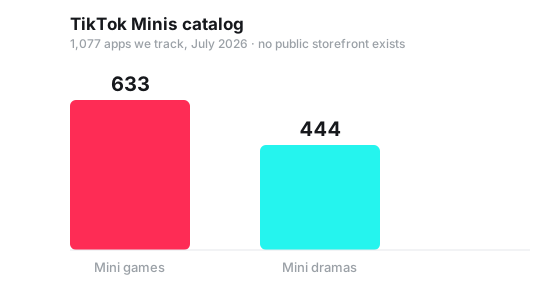
The more useful number is much smaller. Once you strip out the copies, that count collapses to roughly 35 genuinely different apps. On the games side two studios ship two thirds of everything, and the titles barely bother to hide it: 25 games start with the word "ASMR," 21 start with "Help," 17 with "Clean." It is the same handful of games wearing different names. The dramas play the same trick from the other side, a long tail of labels wrapped around a handful of real streaming services.
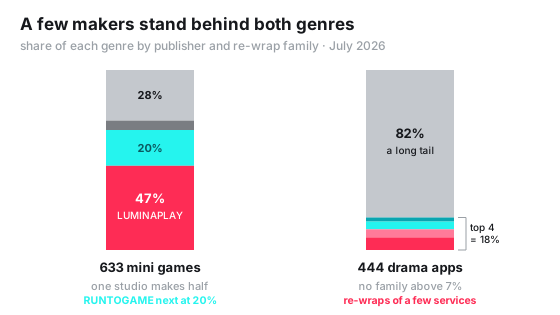
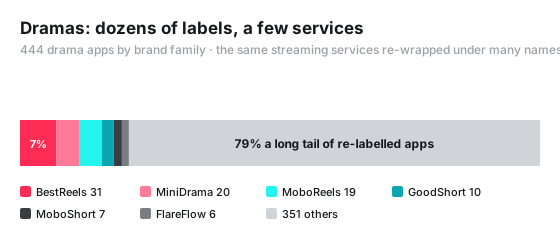
You can read that two ways. The cynical read is that the catalog is a mirage. We read it the other way. A handful of studios pumping reskins into a surface is exactly what a market looks like in its first year, before the real builders show up. It tells you the field is nearly empty. A studio that ships a good app here is not fighting a hundred thousand competitors the way it would on the App Store. It is fighting a few named publishers. That is the opportunity, and it is open right now because almost no one has noticed the platform exists.
How your game gets in front of people
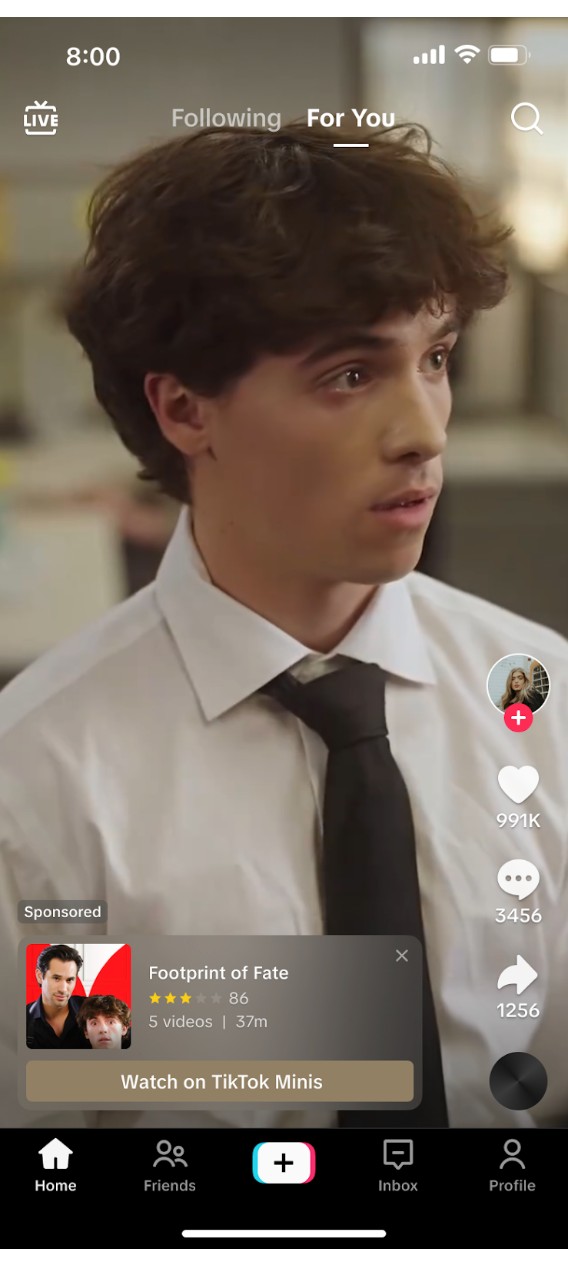
The thing that makes this worth a builder's time is distribution, and it is easier to feel than to explain. You post a clip. It is a slice of your game, or a scene from your drama, with a small button under it. That clip goes into the feed and spreads the same way any other TikTok video spreads: the recommendation engine decides who sees it, and it lands in front of people who were not looking for you and have never heard of you. Someone watches, taps the button, and they are inside your app without ever leaving the app they were already in.
This is the part every Western attempt at instant games got wrong and TikTok already has. Facebook, Snap and Google all tried to run tiny games inside their apps and quietly gave up, because none of them could put a game in front of a stranger who did not go searching for it. TikTok can. Your content earns the reach, not your ad budget. And it is the same organic feed that made TikTok TikTok, pointed at a game instead of a dance. The early numbers point the same way: on one read of the data we have, Minis titles hold about 14 percent of players to the next day, against roughly 10 percent for Facebook's instant games, and about 7 percent by day seven. It is a single-source figure and worth treating as directional, but the direction is what matters.
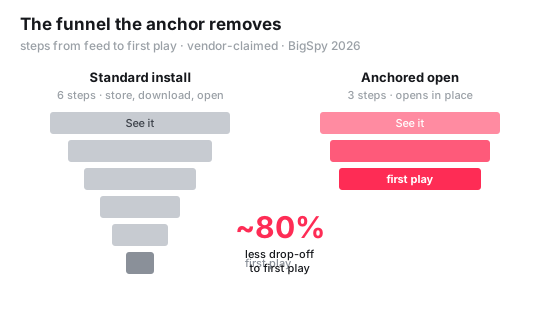
The button under the clip does the work. A normal install is a half-dozen steps to the store and back. The anchor collapses that to a tap, and the app opens where the person already is.
Where this came from
None of this is new. It is the Chinese playbook arriving West a few years late. ByteDance has run mini-programs inside Douyin, the Chinese version of TikTok, since 2018, and there the games alone were about $7.4 billion (RMB 53.5 billion) in 2025, up roughly 34 percent in a year, with more than 100 million people playing every day. That is the ceiling this surface is climbing toward. TikTok tried to import it twice before and failed both times: a creator tool that let people link mini-apps from videos, then a small in-feed games test, both shut down inside a year or two. Minis is the third try and the one that stuck, because this time TikTok wired in everything a builder needs: a real developer kit, a currency, a drama runtime, and a way to get paid.
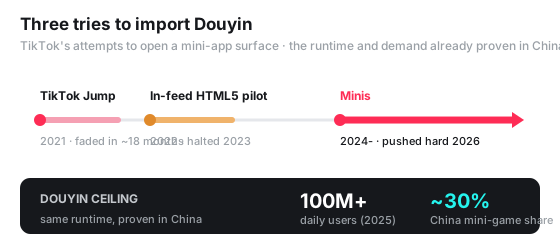
For a builder the important consequence is boring and huge at once: ByteDance runs one codebase across Douyin and TikTok, so a game already live in China moves to TikTok Minis with barely a rewrite. The largest content factory on earth can port its catalog over rather than build a new one. What ports cleanly is the code. What does not port is the money, since Western ad rates and spending are a fraction of China's, but that is a question about how much each app earns, not about how fast the shelf fills.
What a builder gets
A Mini is a real app that already knows who is using it. The moment it opens, TikTok has handed it an identity for the person looking at the screen, with no login to build. From there the toolkit is close to what a native app gets, minus the install. Out of the box a Mini can:
- Know the user on open: a stable ID for that person right away, and their name and picture too if they tap to allow it.
- Charge them in TikTok's own currency, Beans, for anything from a starter pack to unlocking the next episode of a drama.
- Show ads, including the rewarded kind where the user watches a short clip to earn a life or skip a wait.
- Save progress on the device and hold a live connection for real-time multiplayer.
- Put its icon on the phone: a Mini can drop a home-screen shortcut, like an installed app, and reward the user for adding it, so they come back straight from their desktop instead of digging through the feed.
- Park itself in the user's TikTok profile: it can nudge the player to pin the game into their TikTok profile, a standing way back in, and hand them a reward for doing it.
- Turn each player into a door: when someone posts their result into the feed, any stranger who taps it lands inside the game, so every player becomes a new way in.
TikTok runs the hard parts underneath, so the builder ships the game and little else.
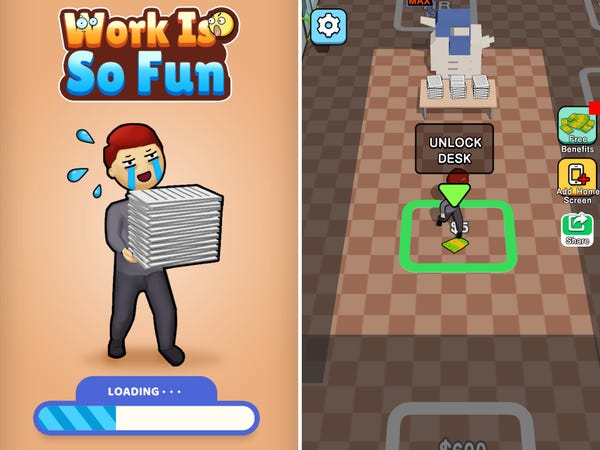
The other half is what the user actually feels, and it is nothing like a web page stuffed in a frame. A Mini game runs full-screen on a real graphics engine, the same Cocos or Unity a normal mobile game is built in, so it looks and moves like something you installed. It just arrived without the installing: opened from a clip, in place, almost instantly.
The cost is getting in. Publishing takes about a month of paperwork: a company, business verification, a settlement contract, an app review, and since the US divestiture in early 2026, an extra US security check on top. It is gated, and today it is gated in a way that suits a studio with a legal team more than a person with an idea.
Where the money comes from
TikTok has its own money, and it runs two separate currencies that are easy to confuse. Coins are the old tipping currency, the ones people buy to send gifts to creators, and they have nothing to do with Minis. Beans are the new one, and Beans are what you spend inside a Mini, both on things in a game and on unlocking the next episode of a drama. A Bean is worth about a cent.
The interesting thing is how each currency is bought, because TikTok treats them as opposites. When you recharge Coins, TikTok pushes you to do it on its website, in its own words "to avoid in-app service fees," so it keeps the roughly thirty percent that Apple and Google would take.
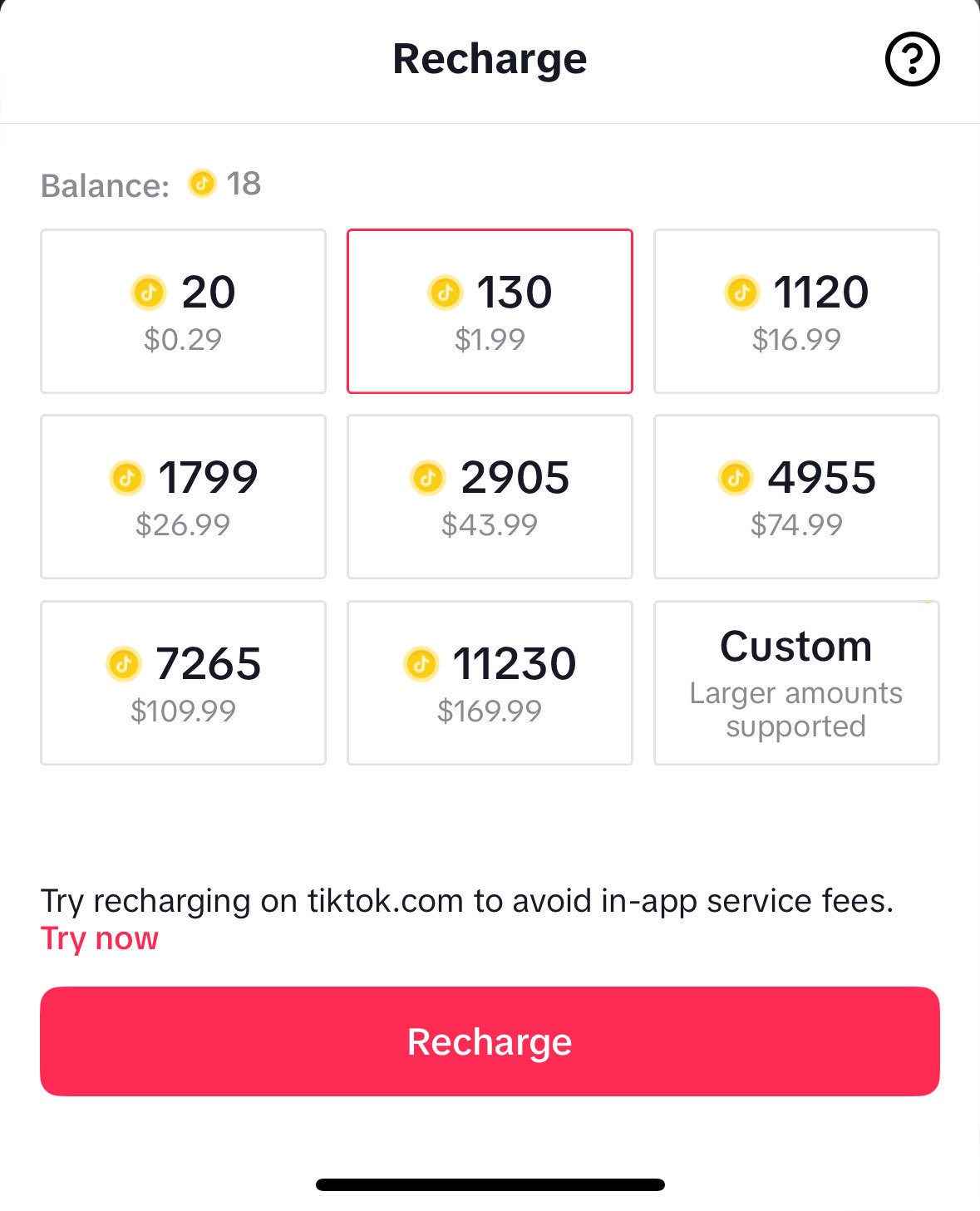
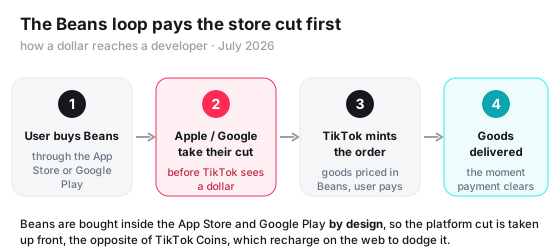
Beans go straight through the App Store and Google Play, on purpose. TikTok fights Apple's cut everywhere else and pays it here, because Beans buy goods sold by outside developers, which is exactly the case Apple reserves its in-app-purchase rule for. So the store takes its cut first, before TikTok books a cent, and it takes it out of the buyer: a dollar of Beans has to ring up at roughly $1.40 or more at checkout, because the store skims its thirty percent off the top before TikTok books anything. Whatever the developer eventually keeps comes out of the smaller number, not the bigger one.
TikTok's own share of what is left is not published. It sits in the contract you sign, which is normal for this kind of deal, and it is a number you can simply ask your partner manager for. The one thing not to do is borrow Douyin's headline "up to 95%," because that number only exists because Chinese phones have no Google Play tax to pay first. On an iPhone it is unreachable no matter how generous TikTok is.
What the money buys
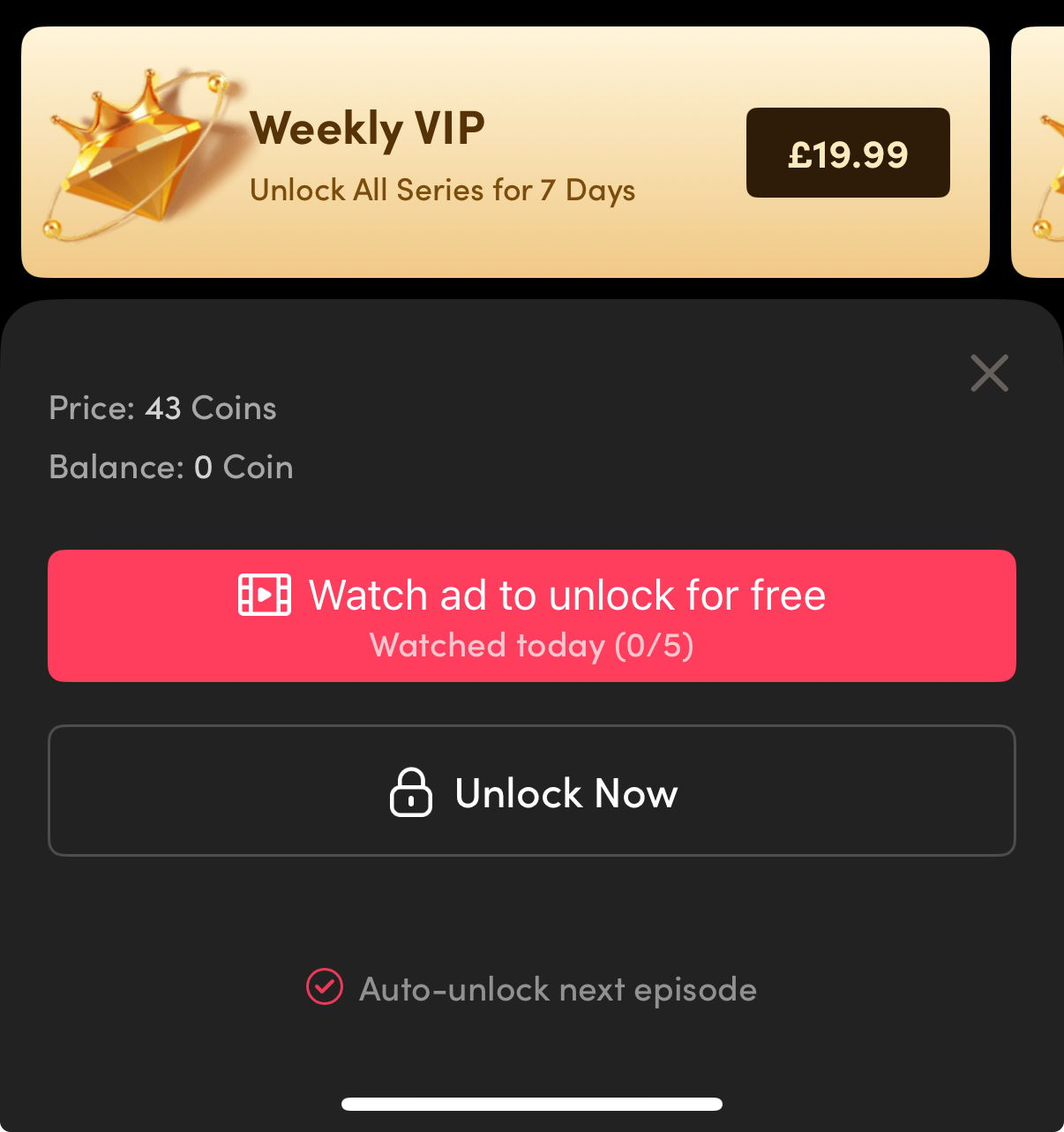
Two rails carry everything, and both are what Douyin spent years proving: people paying with Beans, and ads. Most apps run both. Dramas are the clearest case. You watch the first few episodes free, hit a wall, and pay to keep going, or watch an ad to unlock one episode instead. One thing to note if you open the screen yourself: the paywall labels the balance "coins," but it is Beans you are spending, the drama app just uses its own word for them. The wall itself is the business on one screen.
Games sell the usual things: starter packs, currency, a one-time payment to kill the ads. Douyin shows where the mix ends up once a market grows up. There, buying is already about two thirds of game revenue and ads the rest, and the share keeps tilting toward buying as catalogs get deep enough to sell progress instead of just impressions. TikTok Minis is early enough that ads still carry the free tier, but the direction is set.
Who buys what you build
The usual worry with a platform like this is that it will eventually crush you. Here it runs the other way. ByteDance runs its own apps in the most valuable category. It built PineDrama, a standalone drama app that pulled about 17.6 million downloads in its first month, and it runs Hongguo, the free ad-supported drama giant back home that hit roughly 245 million monthly users by late 2025, past Bilibili and Youku, on about $2.9 billion (RMB 20 billion) in ad revenue. That is a free, ad-supported model ByteDance has already proven at scale. Read cynically, that is the landlord opening his own store. We read it as the platform showing you, out loud, exactly what works and how the money moves.
And it points at something better than a rev-share. ByteDance builds in this category and buys in it. A person who gets a game or a gamified app working here, who starts earning, has a real buyer sitting right there. Reddit bought a game outright off its own platform last year. This is the same shape. You can build a thing, grow it, and sell it, which is a very different pitch than "rent space and hope."
Getting seen, and the part that is still closed
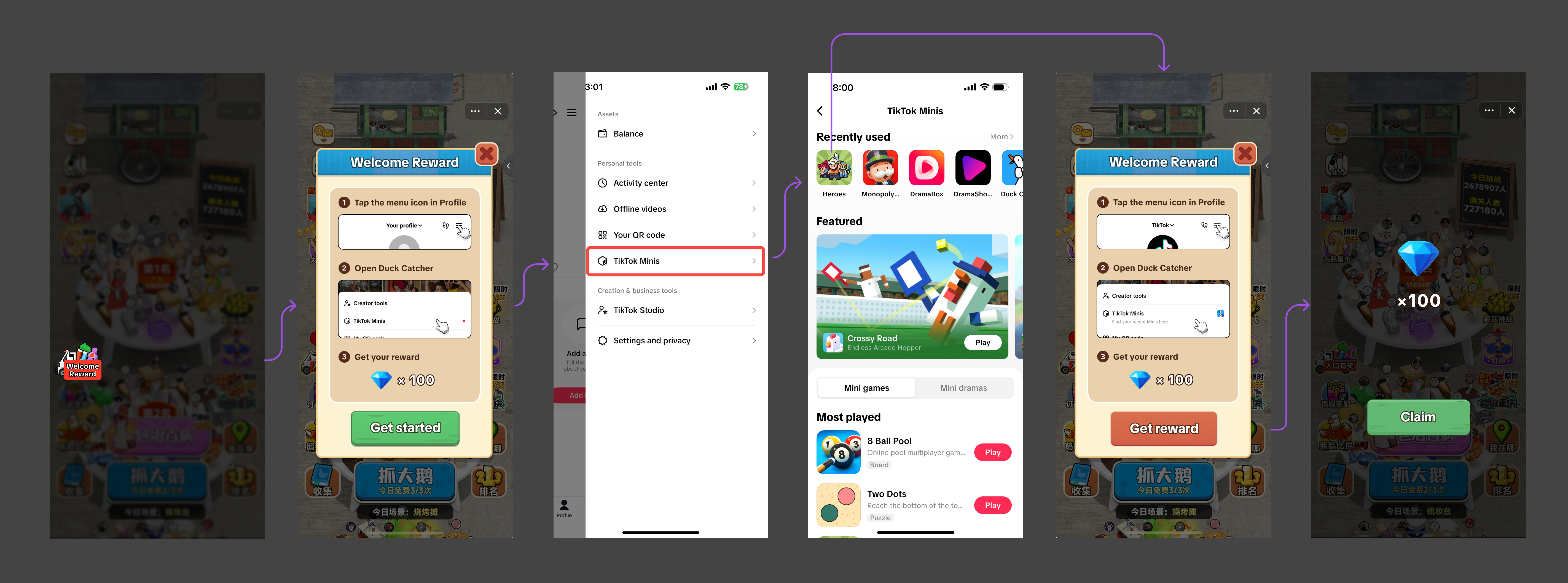
TikTok does have a store, and the "there is no store" line you see in coverage is wrong. It is called the Minis Center, it lives one tap inside your profile, and it is split into games and dramas with the usual featured and most-played rows. What TikTok does not have is a public web page for it, so the store is real but invisible from outside the app. We can only count it by walking it from the inside.
The surface is also still switched off for most people, and that is the tell that it is early. It runs in fifteen markets and none of them are in Europe. Look closer and the fifteen is really two separate ten-market rollouts that only partly overlap. Games are live in high-volume, cheap markets across South-East Asia and the Middle East (the Philippines, Vietnam, Malaysia, Saudi Arabia, Turkey). Dramas are live in wealthy, paying ones (Canada, Australia, New Zealand, South Korea, Mexico). Only five countries run both (the US, Japan, Indonesia, Thailand, Brazil). The split reads as the platform A/B-testing each vertical where it is cheapest to prove: games where volume is cheap, dramas where audiences pay. Even inside a live market, you will not see Minis in your feed until you have gone looking for them once, usually by searching for them and opening one. Then they start showing up. That double gate, a short list of countries and a user who has to opt in, is not a flaw to complain about. It is a market being built in slow motion, in public. We are watching it in its closed phase, which means we are learning the rules a builder will need when it opens up: ship, swipe-test what lands, and lean on the feed for users the same way a creator leans on it for views.
Why it is worth watching now
The point is simple. This is where the market is going, and TikTok is the one player running it on both sides of the world, inside China and out. Even if you never build anything, watching it now is an early read on how a billion-user app is going to work a couple of years from now.
If you do build, the move is to get in early, while the field is a few studios deep and the rules are still being written. The door is built for studios today, a month of gated onboarding with half the real tooling still on the Chinese side, so getting in is the hard part. It will not stay that hard forever. The ecosystem has barely started, and that is exactly why it is worth being in now.
We track these ecosystems closely, TikTok Minis among them. That is how this map got made.